Building a risk management plan: 6 steps
Every business faces uncertainties. Left unchecked, these uncertainties can escalate to material threats. 76% of organizations report that their most serious recent disruption had a significant impact on operations. A risk management plan (RMP) enables organizations to anticipate unexpected risks and reduce their impact on operations.
Read on as we explain what a risk management plan is, its core components, and outline six practical risk management activities to create and maintain one. We’ll also highlight how scenario-based training can strengthen your plan’s effectiveness by increasing risk awareness across teams.
What is a risk management plan?
A risk management plan is a written strategy that details how an organization will:
Identify potential risks.
Evaluate their likelihood and impact.
Mitigate or control identified threats.
It also covers who is responsible for each part of the risk management process and — as risk is inherent to operations and cannot be fully eliminated — how to keep risks at acceptable levels.
Core components of a risk management plan
Risk management plans typically address the following core components:
The plan’s scope and objectives.
A risk register (listing and categorizing known and emerging threats).
The results of a detailed risk analysis (evaluating likelihood and severity).
Defined responses to handle critical exposures.
It also defines roles and responsibilities and outlines how stakeholders will engage in ongoing risk control and communication over time.
6 steps to create and maintain a risk management plan
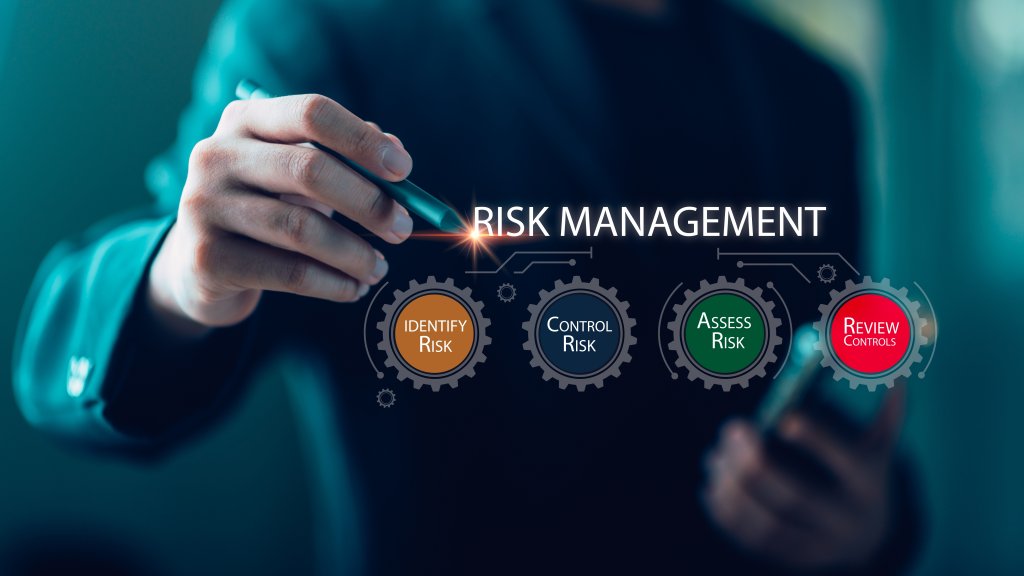
Risk management planning is an ongoing cycle. Here are six steps to develop and maintain an effective RMP.
Define scope
Start by defining what your risk management plan will cover. Determine the scope (which projects, departments, or operations are included) and the objectives of managing risk in those areas. In doing so, identify who will participate in risk management planning.
Also, decide on your risk criteria: the thresholds used to determine which risks are acceptable and which require treatment. This is to ensure risk responses remain proportionate to strategic objectives, resources, and operational constraints.
Identify risks
List all possible risks that could affect the defined scope. Use input from cross-functional sources (i.e., team brainstorming, past incident data, and industry knowledge). Include both readily known risks and emerging or less apparent ones, documented in a formal risk breakdown structure. A risk register is a structured record of identified risks, typically documenting risk source, impact, likelihood, and ownership.
Assess risks
Evaluate how likely each risk is to occur and how severe the impact would be if it does. A risk matrix is a useful tool to visualize and rank risks by probability and impact. The objective of this risk analysis is to accurately identify high-priority threats that warrant immediate attention.
Treat risks
For each major risk, decide on a treatment strategy: avoid it, reduce it (with preventive controls), transfer it (i.e., via insurance), or accept it (with contingency plans). Document all risk response actions in the plan, and assign owners for each chosen measure.
Monitor and review risks
Continuously monitor outcomes and periodically review the strategy. Track key indicators and check them on a regular schedule (e.g., quarterly) to see if the risk level is changing and if existing measures remain effective.
Update the risk management strategy and supporting documents whenever new risks emerge or conditions evolve. Periodic scenario-based testing (such as tabletop exercises) is part of effective monitoring. They confirm whether existing controls remain effective as risks evolve.
Communicate and report
Communicate both negative risks and opportunities within the RMP clearly to all relevant stakeholders. Set up structured reporting (i.e., monthly reviews) so everyone remains informed on key changes. Tailor updates to the audience, offering concise summaries for leadership and detailed insights for those managing operational risks.
The role of scenario-based training in risk management plans
Having a written plan is important, but testing the plan is equally critical. This is where scenario-based training comes in.
Scenario-based training — such as a tabletop exercise (TTX) — immerses your team in realistic simulations, so they can practice their response to risk scenarios in a safe setting. These exercises reveal whether your plan works under pressure and highlight gaps that aren’t obvious on paper, allowing you to fix issues before a real crisis hits.
Avalanche TTX is a next-generation scenario-based training platform. As a senior operator in specialist policing noted, “Avalanche TTX is a seamless software interface; the audience is drawn into an artificial world where they are immediately engaged to make decisions and act under simulated pressure.”
Contact Avalias to learn how Avalanche TTX can help your organization prepare for the unexpected.
Frequently asked questions
What are the 6 key components of a risk management plan?
A successful risk management plan typically includes six key components:
Scope definition: Establishing the boundaries and objectives of the risk management plan.
Risk identification: Listing potential risks.
Risk assessment: Evaluating the likelihood and impact of each identified risk.
Risk mitigation: Planning measures to control each major risk.
Implementation: Executing the risk management plan.
Ongoing risk monitoring: Continuously tracking risks and updating the RMP as necessary.
How does scenario-based training support a risk management plan?
Scenario-based training supports effective risk management, enabling teams to validate RMPs under realistic conditions.
Tabletop exercises — a primary type of scenario-based training — allow teams to practice planned responses and identify weaknesses in existing strategies, producing real-world competence. This process enhances risk awareness and strengthens the overall risk response plan.
How do you write a risk management plan?
To produce an RMP, start by defining the plan’s scope (what it will cover) and objectives. Next, identify risks that could materially impact your organization. Evaluate each risk’s likelihood and impact (using a risk assessment matrix) to prioritize them.
For the highest-priority risks, decide on mitigation measures and assign a risk owner for each action. Finally, document these details and specify how you will monitor and update the plan over time.
Similar Posts